Architectural Models
(click links above to see examples of different model types)
With our architectural background and vast experience in all styles of architectural models, we can offer you unrivalled experience in this field. We can talk your language, grasp your ideas and generally get to grips with understanding and reproducing even the most complicated building.
Our in-house laser cutting facilities allow us to achieve pinpoint accuracy and superb detailing. From the outset, we can help you design and plan your architectural model, identifying the most appropriate scale, style and level of detail for your particular project. The aim is to ensure your architectural model conveys all the relevant information in the most cost-effective way.
Highly Skilled Architectural Model Makers
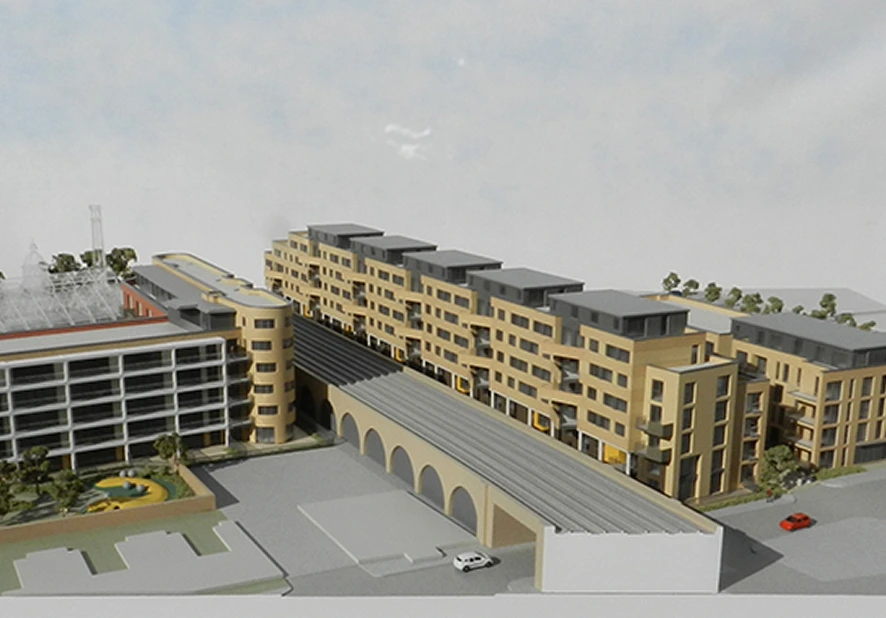
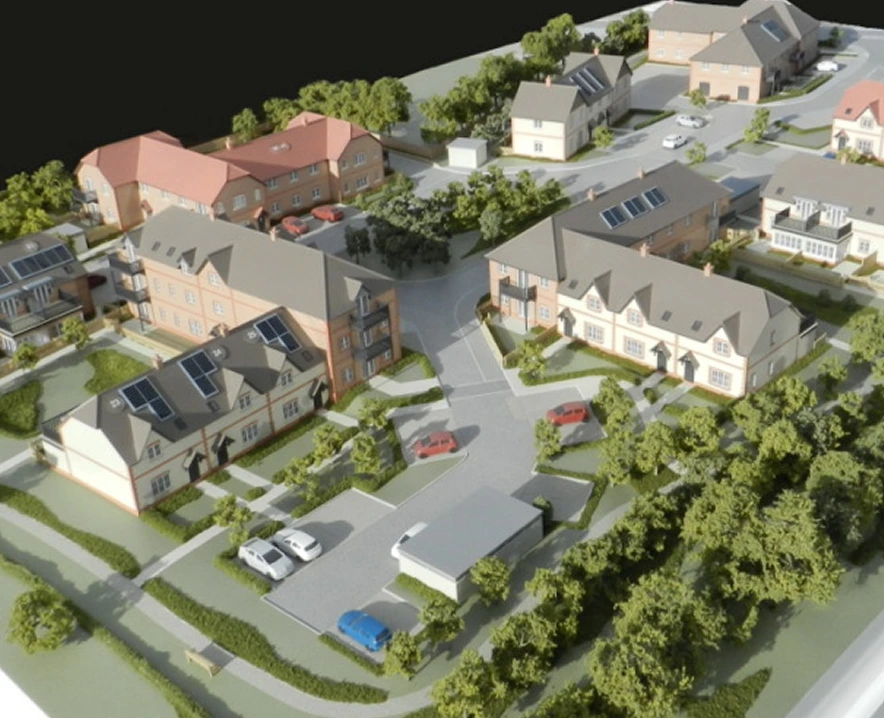
We have a large team of model makers who all have many years of experience in making architectural models. We’ve produced housing models, office models, school models, hospital models, landscape models, interior models - in fact, virtually any type of model you can think of and all to the very highest standard because we take pride in every job that leaves the workshop.
Laser Cut Precision
With our in-house laser cutting facilities we are able to reproduce extremely accurate, very fine detail. Even for very small scale models we can show windows, doors, accurate roof shapes and accurate colouring. And for larger scale architectural models the precision, accuracy and level of detailing is second to none and really brings the architecture to life.
Constructive Advice
From the outset, we can help you design and plan your architectural model, identifying the most appropriate scale, style and level of detail for your particular project. The aim is to ensure your model conveys all the relevant information in the most cost-effective way. We’re always happy to give advice because we know that for many clients it is the first time they have had to commission an architectural model.
Competitive Pricing
We understand that budgets are tight and that you need to get the best possible value from your spend. We’ll give you a realistic, extremely competitive price for a high quality architectural model, with the emphasis being on the high quality. We believe that few companies can compete with us when comparing like for like in terms of quality and levels of service. Please read the testimonials at the side of this page or click the
More testimonials >> link and you’ll see many customer comments that back this up.
Commissioning an Architectural Model
Many of our customers are new to commissioning architectural models and have a lot of questions about the procedure. What information do we need to provide a quote? What information do we need to actually build the model? How much will it cost? How long will it take? These and many other questions are covered in
Model making FAQ. You may also find it useful to read the general guide lines below regarding planning a model, understanding scales and what sort of information is required.
If you need high quality architectural models then call us on 029 2048 6497 now.
Architectural Model Making Advice for Students
Whether you’re an architecture student or doing a design project at school, there are some simple do’s and don’ts that are well worth knowing in order to avoid the basic errors made by many first time model makers.
Click here for Student Model Making Advice.
What scale should the model be?
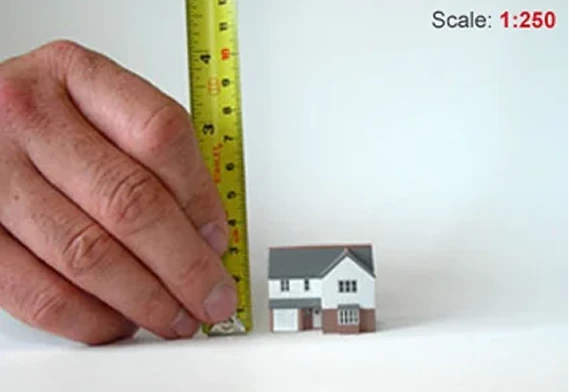
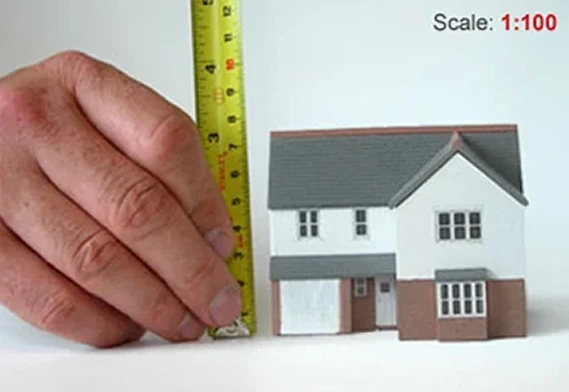
When planning an architectural model the first and most important step is to establish what scale you are going to use. This decision is affected by two things; how big an area you need to model and how much detail you need to show. Being able to understand scales will enable you to work out practical, achievable options for your particular project.
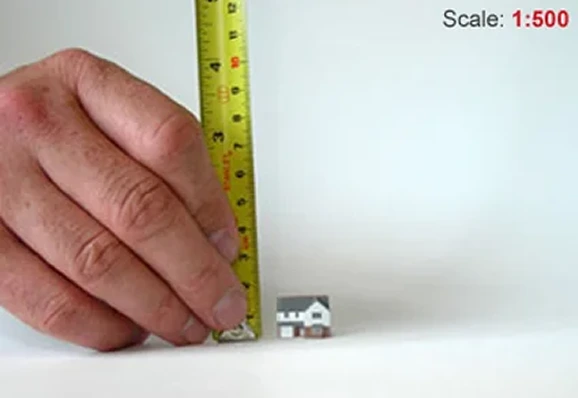
Scales are actually very simple. 1:1 scale ("one to one" ) would be a life size model. 1:10 scale ("one to ten") would be one tenth of actual size. 1:100 would be one hundredth of actual size, and so on. The larger the scale indicator number, the smaller the model, which means less detail can be shown.
Another useful way to think about scales is to work out how many millimetres represents one metre at the particular scale you're considering. We do this by dividing 1000 by the scale indicator number. For example, for 1:200 scale, divide 1000 by 200 and you get the answer 5. Which tells you that one metre will be represented by 5mm on the architectural model. So if you had a square site 100m x 100m, the model would be (100 x 5mm) 500mm square.
For particularly large sites you will need to use a much smaller scale, say, 1:1000. At this scale the architectural model will be one thousandth of the actual size. To work out how many millimetres will represent a metre we redo the sum we did above, 1000 divided by the scale indicator number (in this case also 1000). The answer is obviously 1, meaning that one metre on site will be represented by 1 millimetre on the architectural model. A square site 1000 metres x 1000 metres would therefore be 1000 millimetres square as a 1:1000 scale architectural model.
Information required to make a scale model
The better the information you are able to give us, the better the architectural model we are able to give you. A full set of plans, sections, elevations and a detailed finishes schedule will enable us to make your model quickly and accurately. The information should be sent to us via email or on a disc through the post (ideally as DWGs). It is useful also to have a set of printed drawings as well.
For quotations less is required...a site plan showing the area you want to model plus an indication of any relevant levels... elevations illustrating the architectural character of the building or buildings... an indication of the external finishes (this can be shown on the elevations or given verbally if necessary). With this basic information we should be able to give you a fairly accurate budget cost if not a firm price.
If you give us the go ahead on a project we will then need the full package of information. A typical list might read as follows:
Information required for us to begin work:
- An accurate site plan showing boundaries of model
- Plan showing levels across site
- Plans, elevations, sections of all buildings
- Landscaping plan (if available)
- Any aerial or ground level photos of site.
Info required for later stages of model:
(references for colours and finishes)
- Roads / Parking / Paviours etc. around site
- Main brick or cladding material
- Contrast materials
- Roof finishes
- Balcony & railing colours / design
- Window frame colours.
References can be in the form of actual samples, pictures (of existing buildings or
from catalogues), or as colour refs where appropriate. Alternatively, give details of
web sites where relevant images can be viewed.